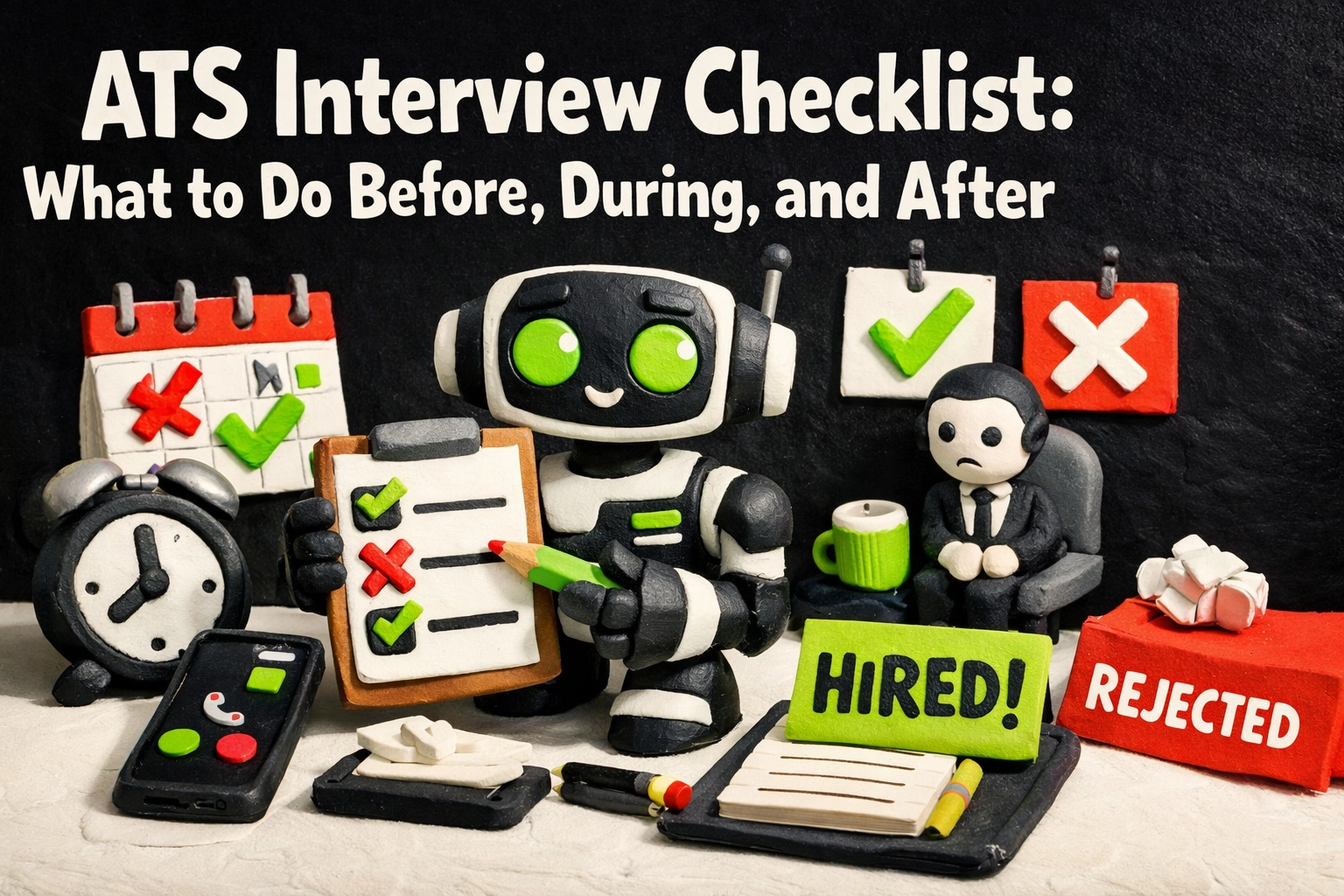
ATS Interview Checklist: What to Do Before, During, and After
Most job seekers believe the Applicant Tracking System (ATS) is a hurdle you jump over once to get an interview. They think that once a human recruiter calls, the "software" part of the journey is over. They are wrong. In 2026, the ATS isn't just a gatekeeper; it’s a shadow participant in your interview. From the moment you pick up the phone for a screen to the final offer letter, every word you say is being mapped back to a digital scorecard that lives inside systems like Greenhouse, Workday, or Lever.
The data is sobering: while 75% of resumes are filtered out before a human sees them, nearly 60% of candidates who make it to the interview stage fail because their verbal "keywords" don't match the structured interview data required by the ATS. If you aren't preparing for an "ATS interview," you are walking into a data-driven trap.
This ATS interview checklist is designed to help you navigate the digital paper trail that follows you from the first "hello" to the final "you're hired."
Phase 1: Before the Interview (The Digital Alignment)
Your goal in the pre-interview phase is consistency. The ATS has already built a profile of you based on your resume. If your interview answers deviate significantly from the data points the system has already indexed, it flags "inconsistency" to the recruiter.
1. Re-Audit Your Source Material
Before you step into the room (or sign onto the Zoom), you must be intimately familiar with the version of the resume that passed the bots. If you haven't yet perfected that document, review our ATS resume 2025 guide to understand exactly what the system is looking for.* The Action: Print out the exact resume you submitted. * The Why: Recruiters often view your "Candidate Profile" in a split-screen view: your resume on the left, the ATS scorecard on the right. If you use different job titles or dates during the conversation, it creates data friction.
2. Map Keywords to "Story Hooks"
In a structured interview, recruiters are often prompted by the ATS to rate you on specific competencies (e.g., "Conflict Resolution" or "Python Proficiency"). * Instead of: Generalizing your experience. * Write: A list of 5-7 "power stories" that specifically use the keywords found in the job description. If "Strategic Planning" was a top-tier keyword, your story needs to use that exact phrase.3. Check the Technology Stack
Is the interview happening via a third-party AI tool? Many companies now use "On-Demand" video interviews or AI-driven scheduling. * Trend: 45% of mid-to-large-scale firms now use AI-assisted sentiment analysis during video screens. * Impact: Your tone, eye contact, and pacing are being converted into data points. * Action: Test your lighting and background. Ensure your internet speed can handle high-definition video so the AI doesn't misinterpret "lag" as "hesitation."
Phase 2: During the Interview (Feeding the Scorecard)
The "Standardized Interview" is the new reality. To eliminate bias (and increase efficiency), recruiters are required to ask every candidate the same questions and input the answers into the ATS "Scorecard" in real-time.
1. Use the "Keyword-First" STAR Method
The STAR (Situation, Task, Action, Result) method is classic, but for an ATS interview checklist, you need STAR 2.0. * The Action: Start your answer by repeating the competency being tested. * Example: "To answer your question about Project Management, a Situation I faced was..." * Why: You are making it easy for the recruiter to type your answer into the "Project Management" box in the ATS. If they have to hunt for your point, your score drops.2. Verbalize the "Hard Skills"
While human rapport is great, the ATS needs hard data. * The Bar has Raised: Simply saying "I'm good with people" isn't enough. * Action: Mention specific software, methodologies, and metrics. Use phrases like, "Using Salesforce, I increased conversion by 22%." These are "parseable" facts that recruiters can quickly note down.3. Avoid the "Vague Trap"
Generic answers fail because they don't provide the recruiter with enough "substance" to justify a high rating in the system. * Instead of: "I worked on a lot of different projects." * Write: "I managed a portfolio of 14 concurrent projects with a total budget of $2.5M."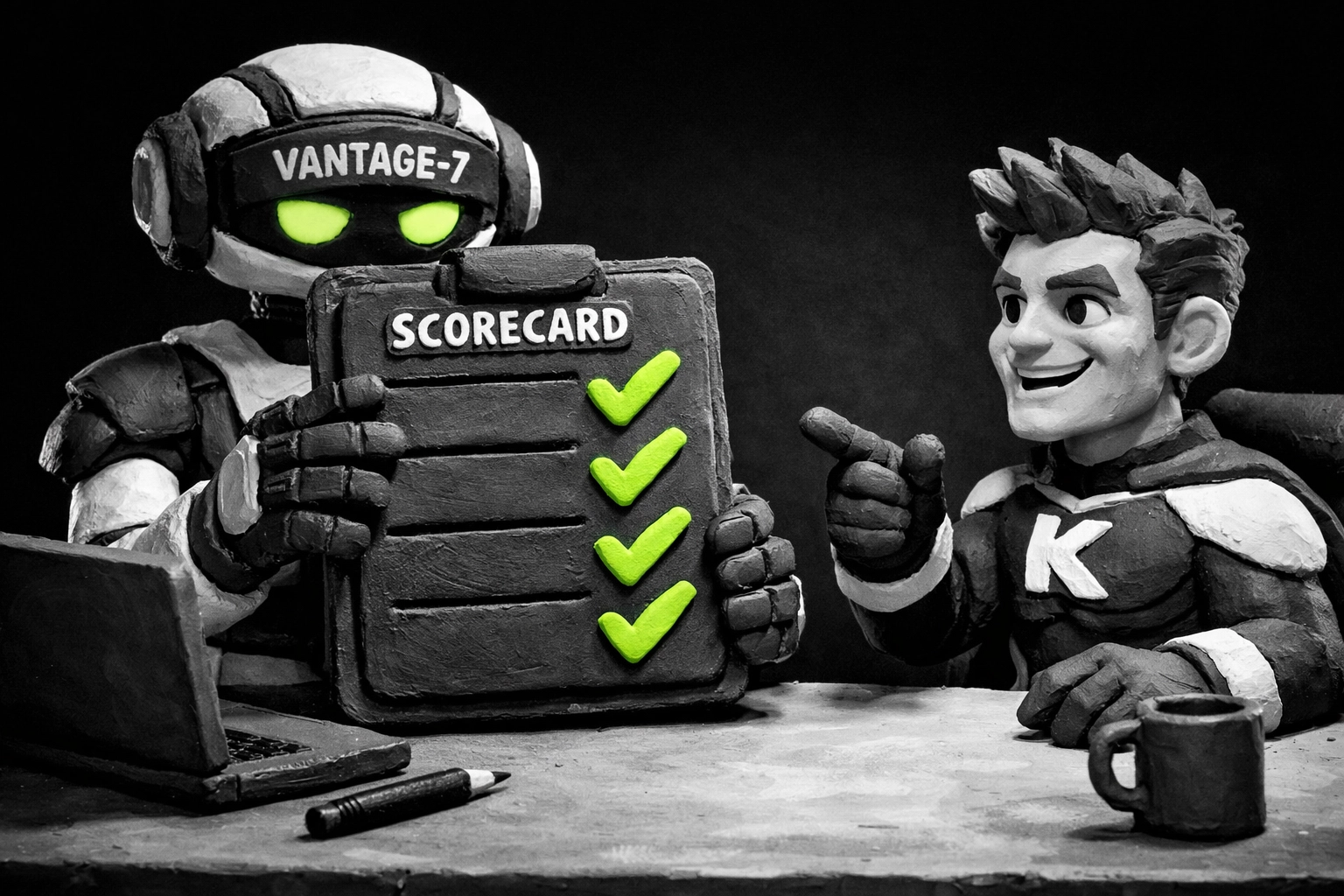
Phase 3: After the Interview (The Feedback Loop)
The work doesn't stop when you hang up. The post-interview phase is where most candidates lose their lead because they treat the follow-up as a social grace rather than a data reinforcement.
1. The "Keyword-Heavy" Thank You Note
Your thank-you email isn't just about being polite; it’s a document that will be uploaded to your candidate file in the ATS. * Action: Send a thank-you note within 12 hours. Reiterate 2-3 key competencies discussed during the interview. * Strategic Link: If you realized you missed a key keyword during the call, include it here. "It was great discussing how I can apply my Agile Certification to your current workflow."2. Monitor Your Candidate Portal
Many modern ATS platforms (like Workday) have a candidate-facing portal. * The Reality: If your status hasn't changed from "Interviewing" to "Hiring Manager Review" within 7 days, you may have fallen into a "ghosting" trap. * Action: Check out our guide on the ghosting epidemic to know when and how to follow up without looking desperate.3. Analyze the Rejection (If It Happens)
If you don't get the job, the ATS usually triggers an automated email. However, the timing of that email tells you where you failed. * Immediate Rejection (1-2 days): You likely failed the scorecard or didn't meet a "knockout" requirement. * Delayed Rejection (2-4 weeks): You passed the ATS but were beaten by a candidate with a higher "Match Score."
The 2026 Interview Reality: Trend / Impact / Action
| Trend | What This Means for You (Impact) | Concrete Steps to Take (Action) |
|---|---|---|
| **Structured Scorecards** | Recruiters can't "vouch" for you based on vibes alone; they need data. | Align your verbal answers with job description keywords. |
| **Sentiment AI** | Your facial expressions and vocal tone are being analyzed for "fit." | Practice "active listening" cues and maintain steady eye contact with the camera. |
| **Automated Ghosting** | If the recruiter doesn't update the ATS, you remain in "limbo" forever. | Set a 5-day follow-up reminder for every interview. |
Next Steps for Your Job Search
Patience isn't optional, but neither is a bad strategy. If you find that you're getting interviews but not getting offers, the problem likely isn't your personality: it’s your data. You are likely failing to provide the "signals" the ATS needs to move you to the next stage.
If you aren't even getting to the interview stage, the problem starts much earlier. You might be suffering from a resume that doesn't parse correctly. Learn more about why resumes don't get callbacks to fix the root of the problem.
Ready to see how a bot sees your resume before your next big interview? Use our ATS checker to identify the gaps in your profile today.
Related Reading
* ATS Resume 2025 Guide: Formatting, Keywords, and How to Beat the Bots * The Ghosting Epidemic: Why Employers Disappear and How to Fight Back * Why Your Resume Isn't Getting Callbacks: 10 Harsh TruthsReady to see how a bot scores you before a recruiter does? Run your resume through our ATS checker and fix the gaps in minutes.
#InterviewPrep #ATS #CareerGrowth #KINETK #JobSearch2026 #InterviewChecklist